
PRESIDENT TINUBU SUPERVISES AGREEMENT SIGNING IN PARIS
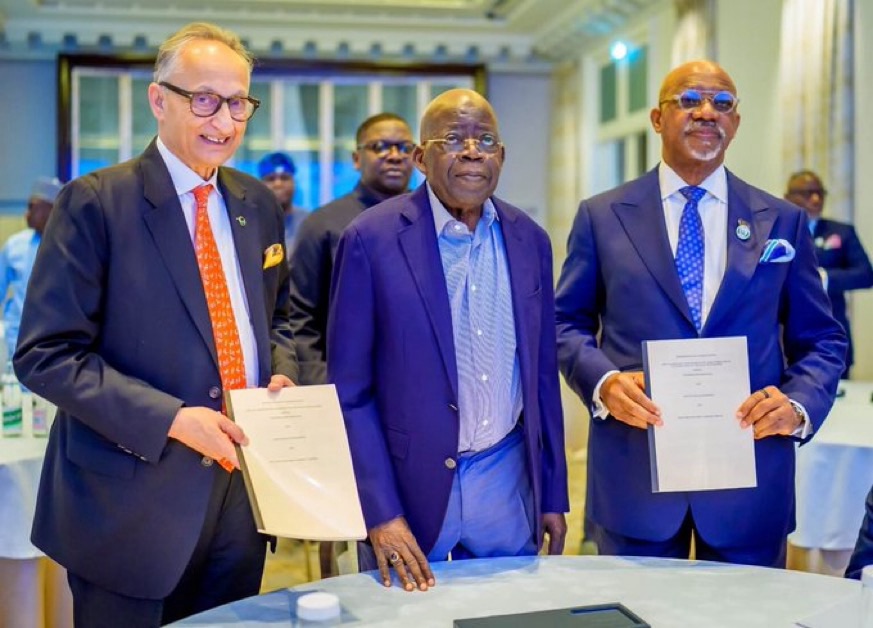
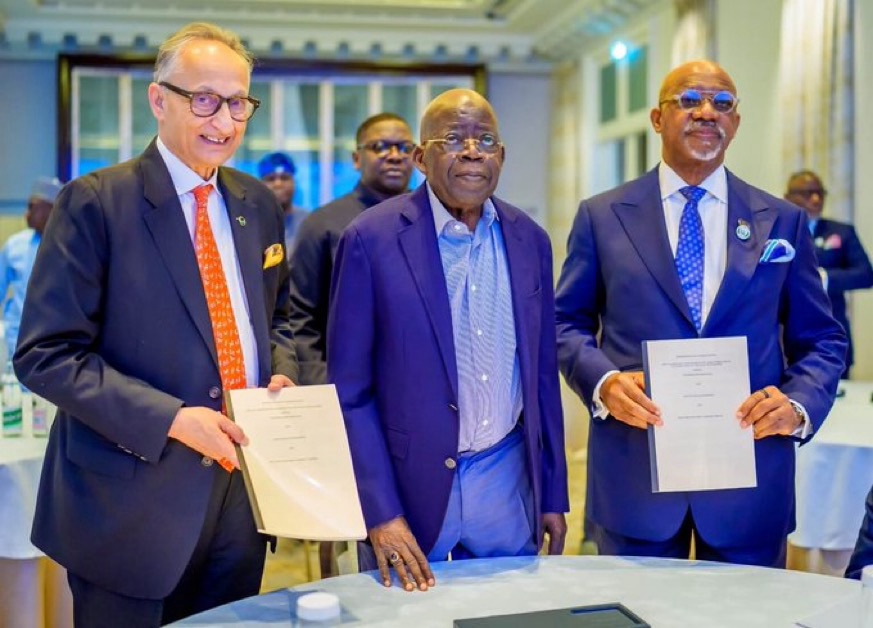
President Bola Ahmed Tinubu has reaffirmed the Federal Government’s commitment to creating a stable and predictable environment for both domestic and international investors, as Ogun State and global ports and logistics company DP World signed Memoranda of Understanding for two major projects in the state. The agreements cover the development of the Gateway Deep Sea Port and the Ogun State Blue Marine Special Economic Zone.
The agreements were signed in Paris, France, with Ogun State Governor Dapo Abiodun leading the state delegation. President Tinubu witnessed the signing and said the Federal Government would provide the necessary regulatory and institutional support to move the projects from agreements to actual implementation.
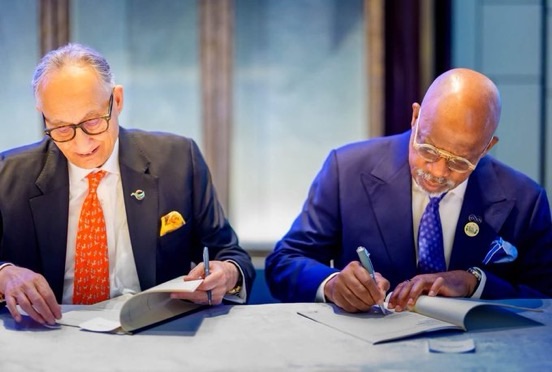
More than $7 billion investment expected
The projects are expected to attract an initial investment of more than $7 billion and, when fully developed, create more than 50,000 direct jobs, alongside additional indirect employment opportunities. The investment package is being presented as part of efforts to expand Nigeria’s productive capacity, attract foreign direct investment and strengthen the country’s maritime and industrial sectors.
The Gateway Deep Sea Port, planned for Ogun Waterside, is expected to have a four-kilometre berth and an 18-metre draft. Its design would allow it to handle larger vessels and provide an alternative gateway for cargo currently moving through the Lagos port corridor.
The proposed port is expected to help reduce congestion around Apapa and Tin Can Island ports, while potentially lowering transportation costs and delays for importers, exporters and consumers. It is also intended to strengthen Nigeria’s position in regional maritime trade and provide improved access to African markets.
10,000-hectare Blue Marine Special Economic Zone
Alongside the port, Ogun State is proposing a 10,000-hectare Blue Marine Special Economic Zone. The zone is designed to support manufacturing, processing, logistics and export-oriented businesses.
According to the Presidency, the concept is to create an integrated system in which imported inputs can be processed into finished products while Nigerian raw materials can be transformed for export. This could link the port directly to industrial production rather than limiting it to cargo movement.
President Tinubu described the combination of the port and economic zone as important to Nigeria’s industrialisation and economic diversification efforts, particularly in expanding non-oil exports and creating employment opportunities.
Importance of road and other infrastructure
The Federal Government has also identified the Lagos-Calabar Coastal Highway as an important part of the proposed economic corridor. The Presidency says the 28-kilometre Ogun section is expected to provide an important transport connection between the port, the economic zone, Lagos, the Nigerian hinterland and wider African markets.
The projects are also expected to form part of a broader strategic corridor involving proposed maritime, energy and logistics infrastructure, including a Nigerian Navy operating base and dockyard and the OK LNG Project.
Government promises investor support
President Tinubu assured investors that the Federal Government would continue to focus on regulatory clarity, policy stability and investment security. He also said the government would work with Ogun State and other subnational governments to remove unnecessary bureaucratic obstacles while ensuring that investments comply with Nigerian laws and regulatory requirements.
The President further said the Federal Government would support road, rail and power connectivity and strengthen the country’s maritime security and investment framework.
The signing therefore marks a major step in the proposed development of Ogun’s coastal and industrial corridor. The key issue now will be the transition from the signed MoUs to financing, construction, infrastructure delivery and eventual operation of the port and economic zone. The Presidency has said it intends to hold the parties involved accountable for their commitments as implementation progresses.