DG NCCC at UN Solutions Dialogue on Adaptation: Nigeria’s Vision for Scalable, Investable Resilience
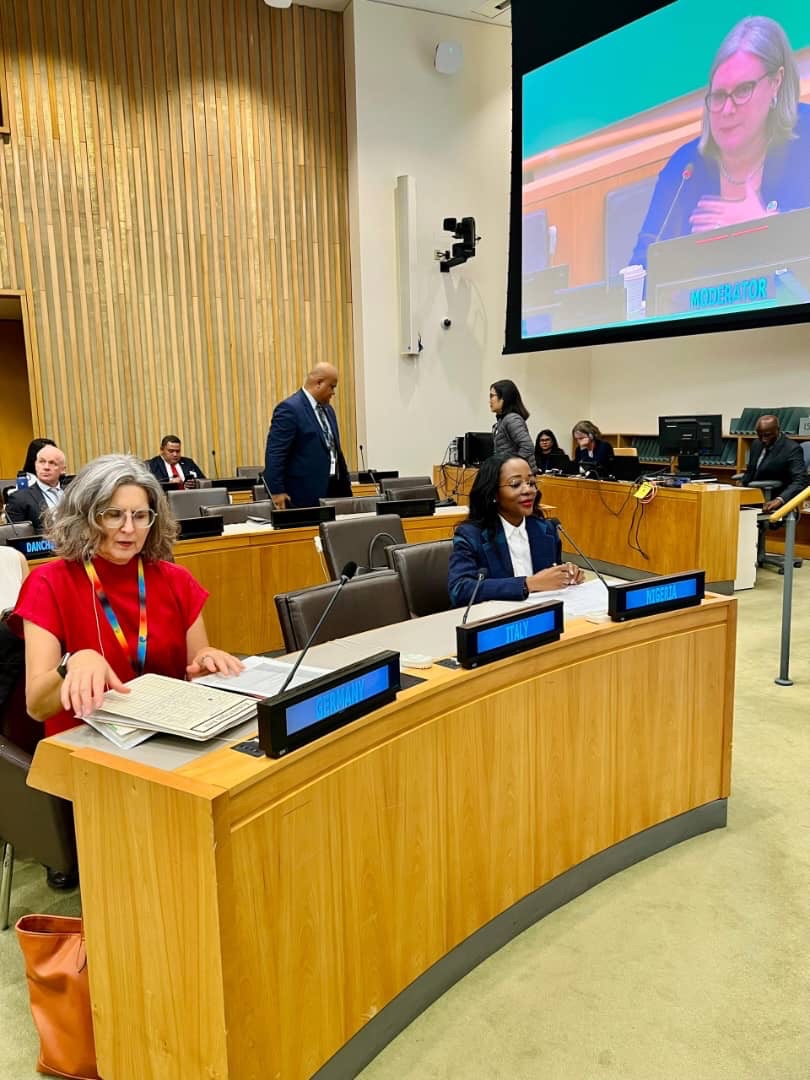
September 23, 2025 . New York, United Nations Headquarters
In a compelling address at the UN Solutions Dialogue on Adaptation, the Director-General of Nigeria’s National Council on Climate Change (NCCC) laid out a bold, actionable vision for scaling adaptation across the country. With an emphasis on country ownership, financial innovation, and institutional strength, the DG articulated Nigeria’s readiness to lead on adaptation in Africa — not just in policy, but in practice.
“Nigeria has the opportunity to scale up adaptation in a way that is both country-owned and investable. To do this, we must begin with the right foundations,” the DG stated.
Legal and Policy Foundations in Place
Nigeria is not starting from scratch. The DG emphasized that the country’s Climate Change Act and National Adaptation Plan already provide the legal and policy bedrock for a coordinated, long-term adaptation effort. Anchoring a National Adaptation Platform in these instruments, the DG argued, will offer the policy certainty and structural clarity that investors seek.
Building the Right Financial Architecture
Beyond policy, the DG underscored the urgent need to develop a robust financial architecture to support climate adaptation. The proposed National Adaptation Platform would integrate three key components:
A Project Preparation Facility
Designed to assist subnational entities, this facility would provide grants and technical support to prepare bankable adaptation projects — a critical step in attracting investment.
A Blended-Finance Fund
Combining public funds, concessional capital from development partners, and private sector investment, this fund would de-risk adaptation investments and crowd in financing at scale.
A Transparent Project Pipeline Registry
By clearly profiling and tracking adaptation projects, the platform would give investors visibility and confidence, ensuring finance is deployed efficiently and equitably.
The DG highlighted the potential of leveraging Nigeria’s Sustainable Bond Framework, which already supports green and blue bonds, to channel proceeds directly into this adaptation platform.
Bridging the Adaptation Finance Gap
The DG confronted the stark reality of adaptation financing head-on:
“In 2021–22, Nigeria received just 6% of what it needs annually for adaptation. And most of that was concentrated in just three sectors: agriculture, forestry, and fisheries.”
Critical areas such as infrastructure, water, and coastal resilience remain deeply underfunded. The DG called for standardization in project screening and evaluation to ensure all sectors can attract financing. This would allow investors to better assess benefits, reduce risk, and deploy capital more quickly and broadly.
Empowering Subnationals
A strong theme of the DG’s remarks was the central role of state governments and local authorities in driving adaptation. Subnationals, the DG noted, are on the frontlines of climate impacts and are uniquely positioned to implement impactful, locally-relevant projects.
“By building capacity and creating climate funds at the state level, we can unlock a pipeline of bankable projects that investors can trust.”
As a case in point, the DG cited Jigawa State’s Disaster Trust Fund, which showcases how local innovation can lead to scalable climate resilience models.
Leveraging Multilateral De-risking Tools
To further incentivize investment, the DG urged greater use of de-risking instruments offered by multilateral development banks — such as partial guarantees, local currency facilities, and technical guarantees — to make adaptation projects bankable and attractive to private capital.
Looking Ahead to COP30: A Call to Action
As the international community prepares for COP30, the DG concluded with a powerful call:
“Let us be bold. Nigeria can demonstrate what it means to build a truly country-owned, investable adaptation platform — one that safeguards our people, strengthens our economy, and sets an example across Africa. The time to invest in resilience is now.”
With a strong legal framework, clear financial strategy, and inclusive governance approach, Nigeria is positioning itself to turn ambition into action — and lead the continent toward a climate-resilient future.