
PHOTOS: Abiodun Presents Ogun APC Gov Candidate, ‘Yayi’ to Remo Monarchs

Ogun State Governor, Dapo Abiodun, has presented the All Progressives Congress (APC) governorship candidate, Senator Solomon Olamilekan Adeola, popularly known as Yayi, and his running mate, Kudirat Adegunwa-Balogun, to the Remo Traditional Council ahead of the 2027 governorship election. The meeting took place at the palace of the Akarigbo of Remoland, Oba Babatunde Adewale Ajayi, in Sagamu.
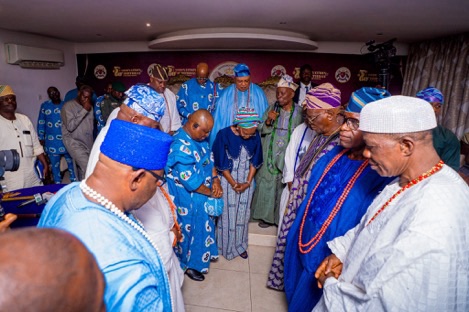
The visit formed part of the APC’s political consultations with traditional institutions across Ogun State as preparations for the 2027 election intensify. Governor Abiodun used the occasion to appreciate the traditional rulers for their support for his administration and to formally introduce Senator Adeola as the candidate he has chosen to succeed him.
Adeola, who represents Ogun West in the Senate, emerged as the APC’s governorship candidate for the 2027 Ogun State election, with Kudirat Adegunwa-Balogun as his running mate. Abiodun has said his support for Adeola is linked to his desire for continuity in the state’s development agenda.
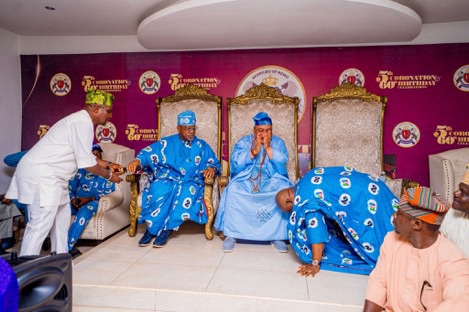
The delegation was received by the Akarigbo and other traditional rulers in Remoland. During the engagement, the importance of continued interaction between political leaders and traditional institutions was highlighted, particularly as the state moves closer to the 2027 election.
The visit is also part of a broader series of engagements involving Adeola and traditional rulers in Ogun State. In July, Abiodun similarly presented Adeola and Adegunwa-Balogun to the Ijebu Traditional Council, where the traditional rulers subsequently endorsed the APC ticket.

Adeola has said that, if elected, his administration would seek to build on existing projects and pursue development across Ogun State’s three senatorial districts. During his recent engagement with the Remo Traditional Council, he also pledged balanced development and donated a 30-seater bus to the council to support its official activities.

The latest engagement comes as political parties in Ogun State step up preparations for the 2027 governorship contest. The APC recently inaugurated its state campaign council and commenced consultations and grassroots mobilisation across the state’s 20 local government areas and 236 wards.