
Joint Annual Review Opens In Abuja With Spotlight On Strengthening Health Care Delivery And Financing.


Nigeria’s health sector is taking stock of the achievements, challenges and impact of ongoing reforms as the 2026 Joint Annual Review (JAR) opens in Abuja, with the Federal Government highlighting progress in maternal and newborn healthcare, disease prevention, immunisation, primary healthcare financing and health insurance coverage.

The three-day meeting provides an opportunity for the Federal Government, state governments, development partners and other stakeholders in the health sector to evaluate the implementation of national health policies, examine performance indicators and identify areas requiring urgent attention.
Coordinating Minister of Health and Social Welfare, Professor Muhammad Ali Pate, and the Minister of State for Health, Dr. Iziaq Salako, say the Renewed Hope Agenda is strengthening the country’s healthcare system through strategic investments, institutional reforms and improved access to essential health services.
However, beyond the achievements being presented by government, the review is expected to examine whether increased funding, policy interventions and ongoing reforms are translating into affordable, accessible and quality healthcare for ordinary Nigerians.
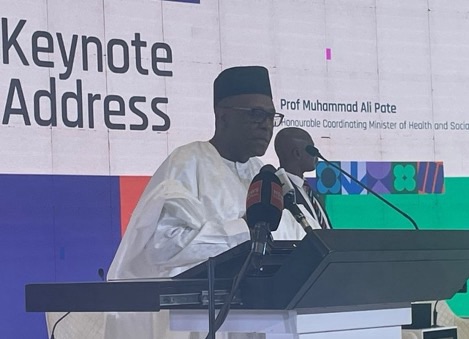
The ministers’ presentation of the government’s performance scorecard focuses on three major priorities: maternal and newborn healthcare under the Maternal and Newborn Mortality Reduction Innovation Initiative (MAMII), disease prevention and immunisation, and sustainable financing of primary healthcare through the Basic Health Care Provision Fund (BHCPF).
Speaking at the opening of the annual meeting, Professor Muhammad Ali Pate said the reforms being implemented by the Tinubu administration were beginning to produce measurable results, particularly in efforts to reduce preventable maternal and newborn deaths.
He explained that maternal and newborn healthcare remains a major priority of the government’s health sector agenda, considering the persistent challenges of maternal mortality, inadequate access to skilled birth attendants and limited availability of essential healthcare services in some communities.
Through the Maternal and Newborn Mortality Reduction Innovation Initiative, MAMII, the government is implementing targeted interventions across 172 high-burden local government areas identified for urgent attention.

The initiative is designed to improve access to antenatal care, skilled delivery services, emergency obstetric care and essential newborn healthcare, while strengthening the capacity of health facilities to manage pregnancy-related complications.
Recent programme figures indicate that approximately 750,000 women have been linked to antenatal care across the priority local government areas, while maternal facility case fatality declined by 22 per cent between 2024 and August 2026.
The government says these interventions are aimed at strengthening the continuum of care for pregnant women and newborns, ensuring that mothers receive timely medical attention and that complications are identified and managed before they become life-threatening.
On disease prevention and control, the Federal Government is also highlighting significant progress through expanded immunisation programmes and public health interventions.
Government figures show that approximately 103 million children had been reached through the measles-rubella vaccination campaign as of May 2026, while more than 18 million girls between the ages of nine and 14 had received the Human Papillomavirus (HPV) vaccine.
The vaccination programmes form part of broader efforts to protect vulnerable populations against preventable diseases, reduce childhood illnesses and strengthen the country’s public health security.
The government is also working to improve disease surveillance, outbreak preparedness, health promotion and emergency response mechanisms to ensure that potential public health threats are detected early and addressed effectively.
Another major area of focus at the review is the financing of primary healthcare, which remains the foundation of an effective and accessible healthcare system.
Professor Pate disclosed that the Tinubu administration had disbursed 249.6 billion naira to the Basic Health Care Provision Fund within three years, representing 77.1 per cent of total disbursements since the establishment of the fund in 2019.
The BHCPF was established to provide sustainable financing for essential healthcare services, particularly at the primary healthcare level, while addressing financial barriers that prevent vulnerable Nigerians from accessing medical attention.
The fund currently supports direct financing to 8,309 primary healthcare facilities across the 36 states and the Federal Capital Territory, with plans to expand coverage to additional facilities.