ATSTC Inaugurates Air Traffic Control and Surveillance Radar Course 3, Strengthens National Airspace Safety
Kaduna, Nigeria | April 7, 2026
The Air Traffic Services Training Centre (ATSTC), Kaduna, has inaugurated the Air Traffic Control and Surveillance Radar Course 3 (ACSR 3) for personnel drawn from both military and civil aviation institutions, in a move aimed at strengthening Nigeria’s airspace safety and security.
The programme, launched on Tuesday, April 7, 2026, comprises 10 officers from the Nigerian Air Force (NAF) Air Traffic Services specialty and 10 cadets from the Nigerian Airspace Management Agency (NAMA). The course follows closely on the heels of ACSR 2, which was inaugurated barely two months ago for 20 NAMA cadets.
The initiative underscores ATSTC’s sustained commitment to addressing the backlog of Air Traffic Control Officer trainees while boosting Nigeria’s air navigation manpower for both civil and military aviation operations. It also reinforces the longstanding collaboration between the Nigerian Air Force and NAMA, a partnership considered vital for enhancing the safety, efficiency, and coordination of air operations nationwide.
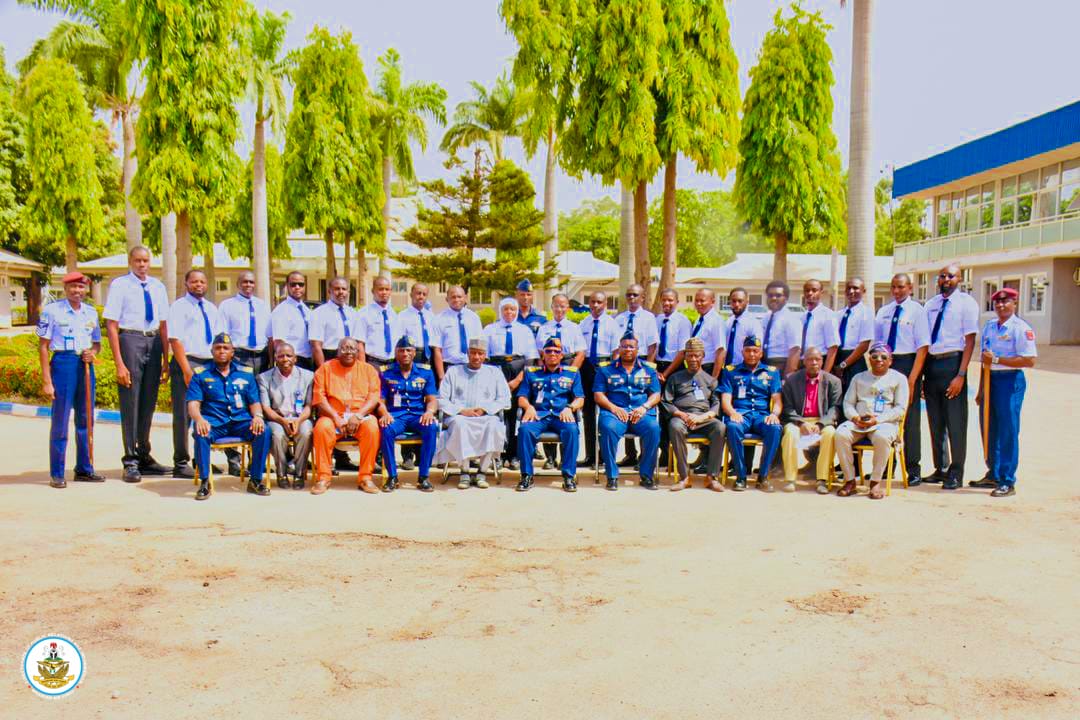
The inauguration ceremony was attended by the representative of the Airspace Manager, Abdulmajid Muhammed, who also serves as the Air Traffic Operations Manager at Hassan Usman Katsina International Airport. Other attendees included the Acting Deputy Commandant, instructors, principal staff officers, and deans from various schools within the Centre.
Presiding over the event, the Commandant of ATSTC, NB Folaji, reaffirmed the Centre’s dedication to strategic capacity building and effective collaboration with NAMA in training the next generation of air traffic controllers.
He charged participants to remain disciplined, adaptable, and committed throughout the 65-week programme, emphasizing that strong work ethics, time management, and teamwork would be essential for success.
Air Vice Marshal Folaji further noted that the course is designed to deliver globally benchmarked professional competence in air traffic control and surveillance radar operations, in line with international aviation standards.
He added that ATSTC continues to build its reputation as a centre of excellence for training airspace management professionals whose expertise is critical to flight safety, mission planning, airspace coordination, and the seamless execution of both civil and military air operations.
The initiative, he said, reinforces the Nigerian Air Force’s broader objective of strengthening national airspace security, enhancing operational readiness, and advancing Nigeria’s aviation ecosystem through sustained collaboration with key stakeholders.