FG to Deploy Ranching Strategy in Kwara, Sedentarisation Key to Ending Rural Violence
Ilorin, Nigeria – February 14, 2026
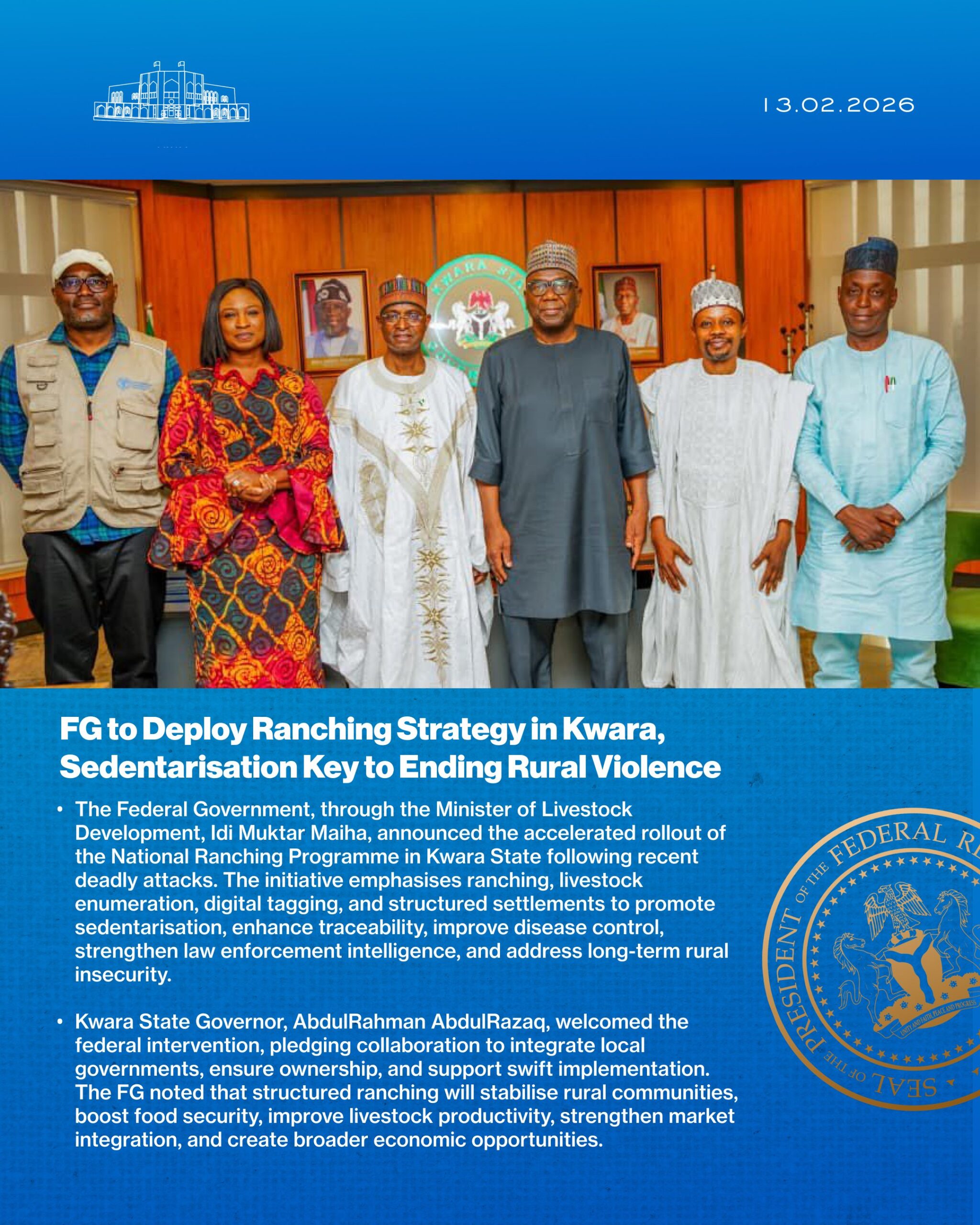
The Federal Government has announced the accelerated rollout of the National Ranching Programme in Kwara State, positioning sedentarisation as a critical solution to recurring rural violence and insecurity.
The Minister of Livestock Development, , disclosed the move following recent deadly attacks in parts of the state, stressing that a structured ranching system would address the root causes of farmer-herder conflicts while modernising Nigeria’s livestock sector.
A Comprehensive Ranching Framework
According to the Minister, the National Ranching Programme will focus on establishing well-planned ranches, conducting comprehensive livestock enumeration, deploying digital tagging systems, and developing structured settlements for herders.
These measures are designed to promote sedentarisation — the transition from open grazing to settled livestock production — while enhancing traceability, improving disease surveillance and control, and strengthening law enforcement intelligence. Authorities believe that better tracking of livestock movement will curb criminal infiltration and reduce clashes between farming and pastoral communities.
The initiative also aims to improve productivity through access to veterinary services, modern breeding practices, and improved feed systems within secure ranch environments.
Kwara State Pledges Support
Kwara State Governor, , welcomed the federal intervention and pledged full collaboration with the Federal Government to ensure effective implementation across the state.
Governor AbdulRazaq emphasized the importance of integrating local governments into the process to guarantee community ownership and sustainability. He assured residents that the state would work closely with federal authorities to fast-track the programme and address security concerns in affected areas.
Boosting Food Security and Economic Growth
The Federal Government noted that structured ranching will not only stabilise rural communities but also enhance food security by increasing livestock productivity and reducing losses associated with conflict and disease outbreaks.
By transitioning to ranch-based systems, Nigeria’s livestock value chain is expected to benefit from improved market integration, quality control, and investment opportunities. The model is also projected to generate employment across feed production, veterinary services, processing, and logistics.
Officials underscored that the ranching strategy represents a long-term pathway toward ending rural violence, fostering peaceful coexistence, and unlocking broader economic opportunities within the agricultural sector.
With the accelerated rollout in Kwara, the Federal Government signals a renewed commitment to modern livestock management as a cornerstone of national security and sustainable rural development.
@Ngfmld