INEC Chairman Moves to Safeguard #NigeriaDecides2027 Elections with Major Procurement Reforms
Lagos, March 30, 2026
The Independent National Electoral Commission (INEC) has taken a significant step toward strengthening Nigeria’s electoral integrity with the unveiling of the timetable and schedule of activities for the 2027 General Election, alongside a renewed push to reform its procurement systems.
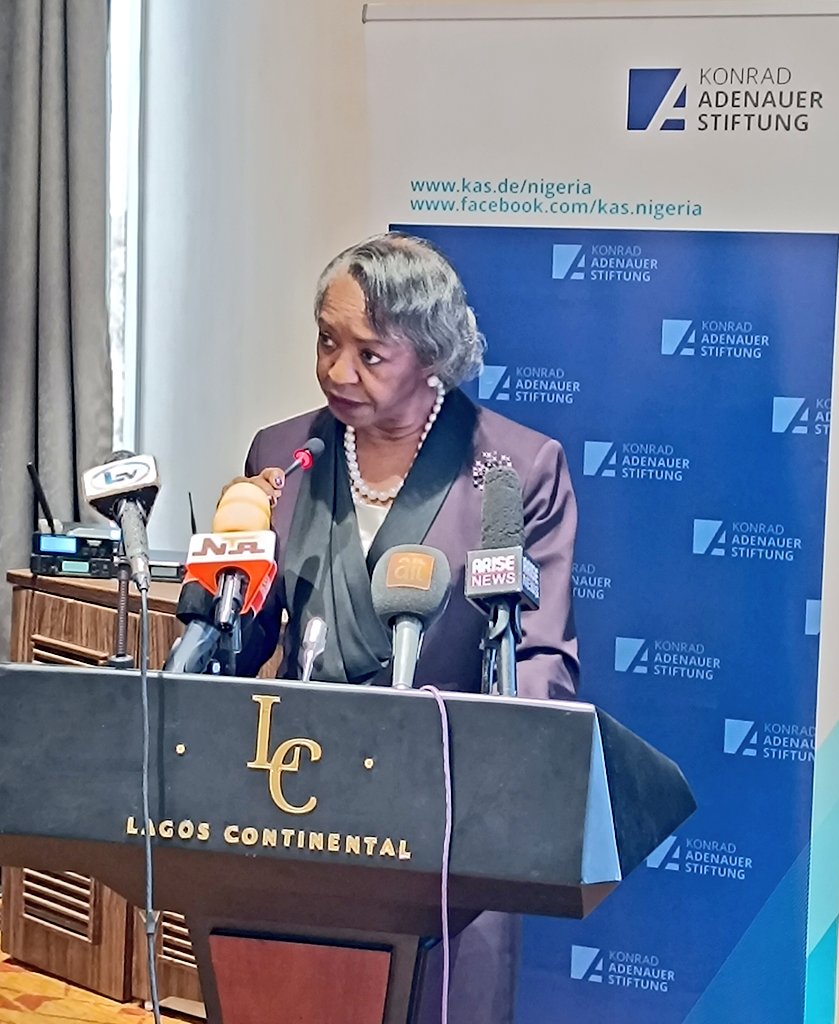
The development was announced during a three-day high-level capacity-building workshop for National Electoral Commissioners and the Commission’s management, held in Lagos in collaboration with the Konrad Adenauer Stiftung (KAS).
Declaring the workshop open on behalf of the INEC Chairman, Joash O. Amupitan, the National Commissioner, May Agbamuche-Mbu, described the engagement as a defining moment in the Commission’s reform journey, particularly at a time of evolving legal and operational dynamics within Nigeria’s electoral system.
She conveyed the Chairman’s position that INEC’s responsibility goes beyond conducting elections to safeguarding the entire democratic ecosystem through systems that are transparent, accountable, and resilient.
In his address, Prof. Amupitan reflected on his 159 days in office, describing the period as a critical phase in Nigeria’s democratic evolution that requires a rethinking of the Commission’s operational approach. He stressed the need to move from reform rhetoric to practical implementation.
According to him, the credibility of elections depends heavily on meticulous planning, transparent processes, and accountable systems. He highlighted procurement as a crucial yet often overlooked component of electoral integrity, describing it as the “invisible architecture” that underpins successful elections.
“When procurement is handled with integrity, it becomes the bedrock of public confidence. When it is compromised, it becomes the fault line through which trust collapses,” he stated.
The INEC Chairman emphasized that the Commission’s responsibilities span the entire electoral value chain—from planning and logistics to procurement and deployment—adding that each component must function efficiently to ensure credible, transparent, and verifiable elections.
He also underscored the importance of the Electoral Act 2026, describing it as a landmark reform that has significantly reshaped the Commission’s operations. He noted that the amendment to Clause 28, which reduces the mandatory notice period for elections from 360 to 300 days, introduces a compressed timeline requiring greater efficiency and precision.
“This compressed timeline is not a challenge to be lamented but a reality to be mastered,” Amupitan said. “It requires us to operate like a well-calibrated machine, where procurement, logistics, training, and deployment work in seamless synchrony.”
The Commission reaffirmed its commitment to strengthening institutional capacity, enhancing transparency, and ensuring that the 2027 general elections meet the highest standards of credibility and public trust.