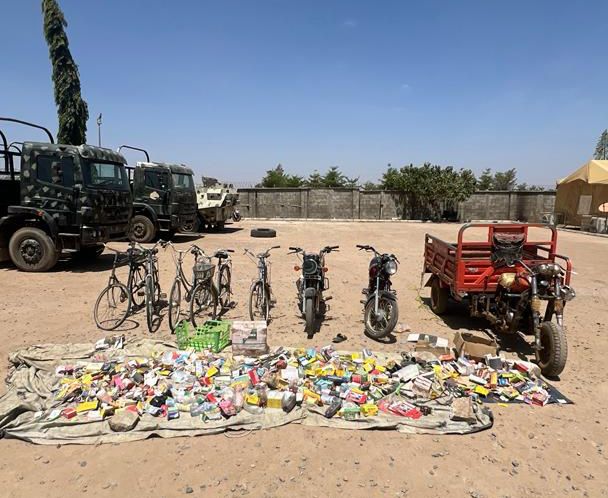
TROOPS OF OPERATION HADIN KAI CRUSH MULTIPLE ISWAP ATTACKS IN GAJIRAM, GAJIGANA, MAYANTI, AND RECOVER HEAVY ARMS AND AMMUNITIONS
Nigeria, March 2, 2026
Troops of the Joint Task Force Operation HADIN KAI (OPHK) have once again demonstrated resilience and battlefield dominance by decisively foiling coordinated attacks by (ISWAP) on Forward Operating Bases in , and , while intensifying offensive operations across Sector 2.
The failed assaults, launched between the late hours of February 28 and the early hours of March 1, 2026, underscore what security sources describe as the growing desperation of terrorist elements under sustained military pressure on their enclaves, logistics corridors, and leadership structures. The coordinated attacks were met with fierce resistance from troops, forcing the insurgents into disorderly retreats with significant losses.
According to a statement issued by the Media Information Officer, Headquarters Joint Task Force Operation HADIN KAI, Lieutenant Colonel Sani Uba, exploitation operations conducted after the engagements confirmed the recovery of five terrorist corpses and a cache of heavy weapons. Among the items recovered were three PKT automatic anti-aircraft guns, two RPG-7 tubes, four AK-47 rifles, two FN rifles, three RPG bombs, and large quantities of 7.62mm ammunition.
Further searches led to the recovery of four additional AK-47 rifles, five anti-tank bombs, three locally fabricated mortar bombs, one armed drone, six fully loaded 7.62mm NATO magazines, barbed wire cutters, specialized ammunition, and other combat support equipment, including poisoned arrows.
Military authorities confirmed that all attacked locations remain firmly under the control of troops. The scale of recoveries and confirmed enemy casualties, they noted, reflects the degrading combat capacity of ISWAP elements operating in the Lake Chad Basin region.
Operation HADIN KAI continues sustained clearance and stabilization operations aimed at dismantling terrorist networks and restoring lasting peace across affected communities in Borno State and the wider North-East region.