
MDGIF: ₦671BN PUBLIC FUNDS LEVERAGED TO UNLOCK ₦1.6TRN PRIVATE INVESTMENT
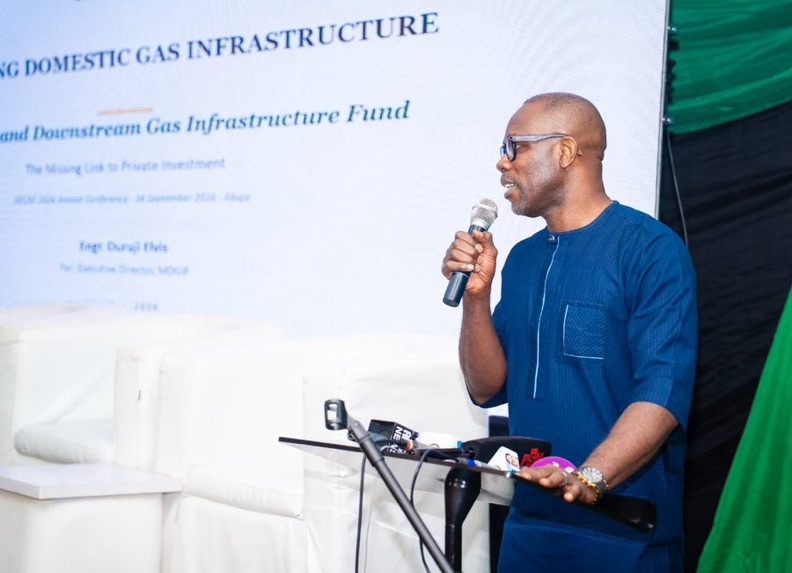
The Midstream and Downstream Gas Infrastructure Fund (MDGIF) says it has leveraged ₦671 billion in public funds to attract about ₦1.6 trillion in private investment into Nigeria’s midstream and downstream gas infrastructure sector.
The Executive Director of MDGIF, Oluwole Adama, disclosed this at the 2026 Annual Conference of the Association of Energy Correspondents, Abuja (AECAF), where he explained that the Fund’s strategy is to use public capital to de-risk projects, improve their bankability and encourage greater private-sector participation.
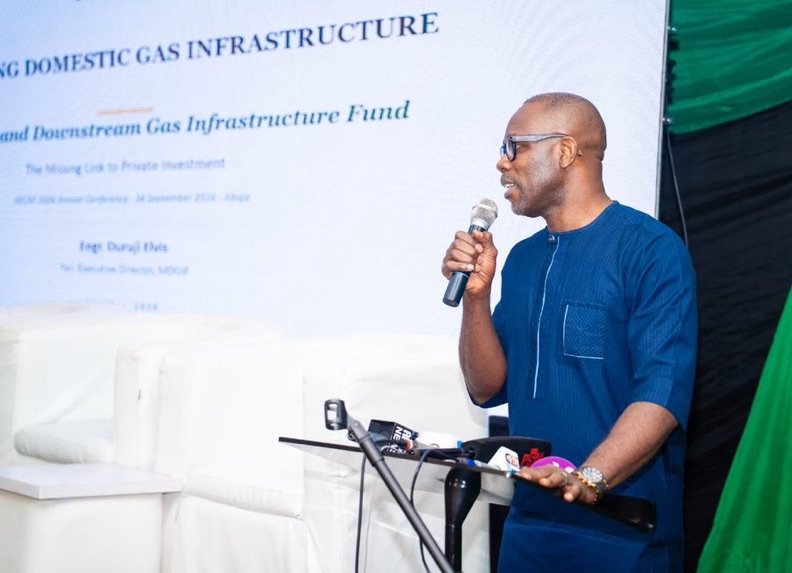
According to MDGIF, its interventions currently cover 31 projects and 205 infrastructure assets across the country. When fully operational, the projects are expected to contribute approximately 475 million standard cubic feet of gas per day to the domestic market.
The Fund said its public investment has mobilised private capital equivalent to about 2.4 times its own contribution, reflecting its role as a catalytic financing platform rather than simply a direct funding mechanism.
MDGIF identified high financing costs, infrastructure gaps, regulatory uncertainty, and technical and commercial risks as some of the major barriers to investment in the gas infrastructure sector. Its approach is therefore focused on identifying and reducing these risks to make strategically important projects more attractive to investors.
The Fund also disclosed that some of its projects could increase domestic gas supply by about 25 per cent, based on current domestic production of roughly 1.9 billion standard cubic feet per day.
On gas-flaring reduction, MDGIF said it has partnered with four flare-out projects expected to monetise about 444 million standard cubic feet of gas daily that would otherwise have been flared, while potentially eliminating approximately 2,845 metric tonnes of emissions per day.
The Fund said the investments are intended to strengthen Nigeria’s domestic gas infrastructure and support wider economic activities, including power generation, industrial production, transportation and job creation, while attracting additional private capital into the sector.