Tinubu Praises Army Reforms Under COAS General Waidi Shaibu

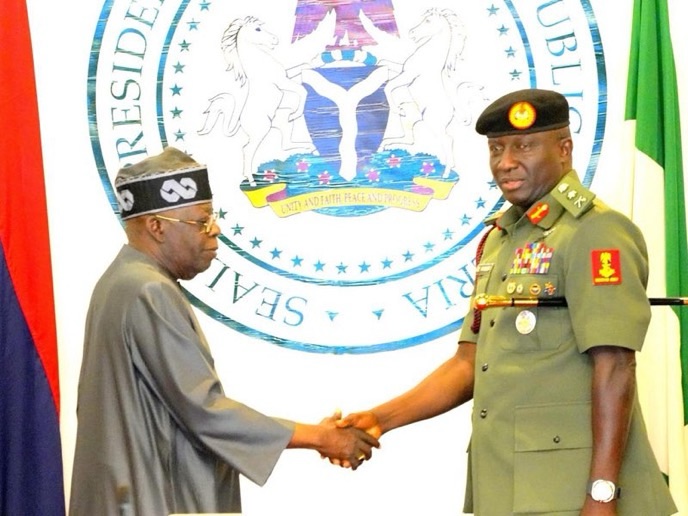
President Tinubu Commends Shaibu’s Leadership Philosophy, Highlights Military Reforms
President Bola Ahmed Tinubu has commended the leadership philosophy of the Chief of Army Staff (COAS), Lieutenant General Waidi Shaibu, describing it as a foundation for building a more professional, adaptable, combat-ready and resilient Nigerian Army.
The President made the commendation in the foreword to a book titled The Shaibu Doctrine: Mission Command and the Remaking of Nigeria’s Army at War, co-authored by Dr. Muhammed Sani Abubakar and Associate Professor Sunday Adejoh of the Nigerian Defence Academy.
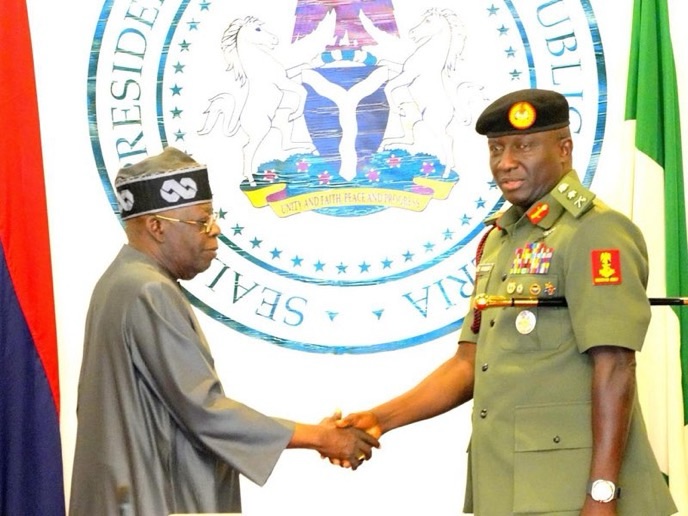
Tinubu explained that the military reforms under Shaibu’s leadership were centred on professionalism, adaptability, combat readiness and resilience. According to him, these principles guide the Army’s approach to training, equipment, operational planning and leadership.
The President also highlighted the Army’s shift from static defensive operations towards more mobile offensive strategies aimed at improving its ability to respond to evolving security threats across the country.
He noted that the reforms extended beyond battlefield operations to include the adoption of modern technology, the development of indigenous military equipment, improved personnel welfare and stronger adherence to military ethics.
Tinubu emphasised that strengthening the Armed Forces remained essential to protecting Nigeria’s territorial integrity, safeguarding citizens and creating an environment where democracy and national development could flourish.
The book examines Shaibu’s leadership approach, particularly the concept of Mission Command, which empowers subordinate commanders to make operational decisions within their areas of responsibility while working towards broader strategic objectives.
One of the central principles of the doctrine is a soldier-first approach, which prioritises personnel welfare, morale, professional training and empowerment as important foundations for operational effectiveness.
The co-author, Abubakar, explained that effective military leadership requires trust between commanders and their subordinates, efficient administration, adequate resources and strong cooperation among security agencies.
The reforms also underscore the importance of continuous innovation and institutional adaptation as the Nigerian Army confronts persistent security challenges, including terrorism, insurgency and banditry.
Tinubu’s commendation highlights his administration’s stated commitment to strengthening military capacity, improving the welfare of personnel and supporting initiatives aimed at enhancing national security.
However, the long-term impact of the reforms will depend on their sustained implementation, adequate resources, effective coordination and measurable improvements in the Army’s ability to protect lives and property across Nigeria.