Nigeria Launches CNG Vehicle Conversion Financing Scheme — Here Is What It Means for Drivers
The Federal Government has taken a step that could genuinely matter to millions of Nigerian drivers — launching a financing scheme that makes converting vehicles to Compressed Natural Gas far more accessible than it has been up to this point.
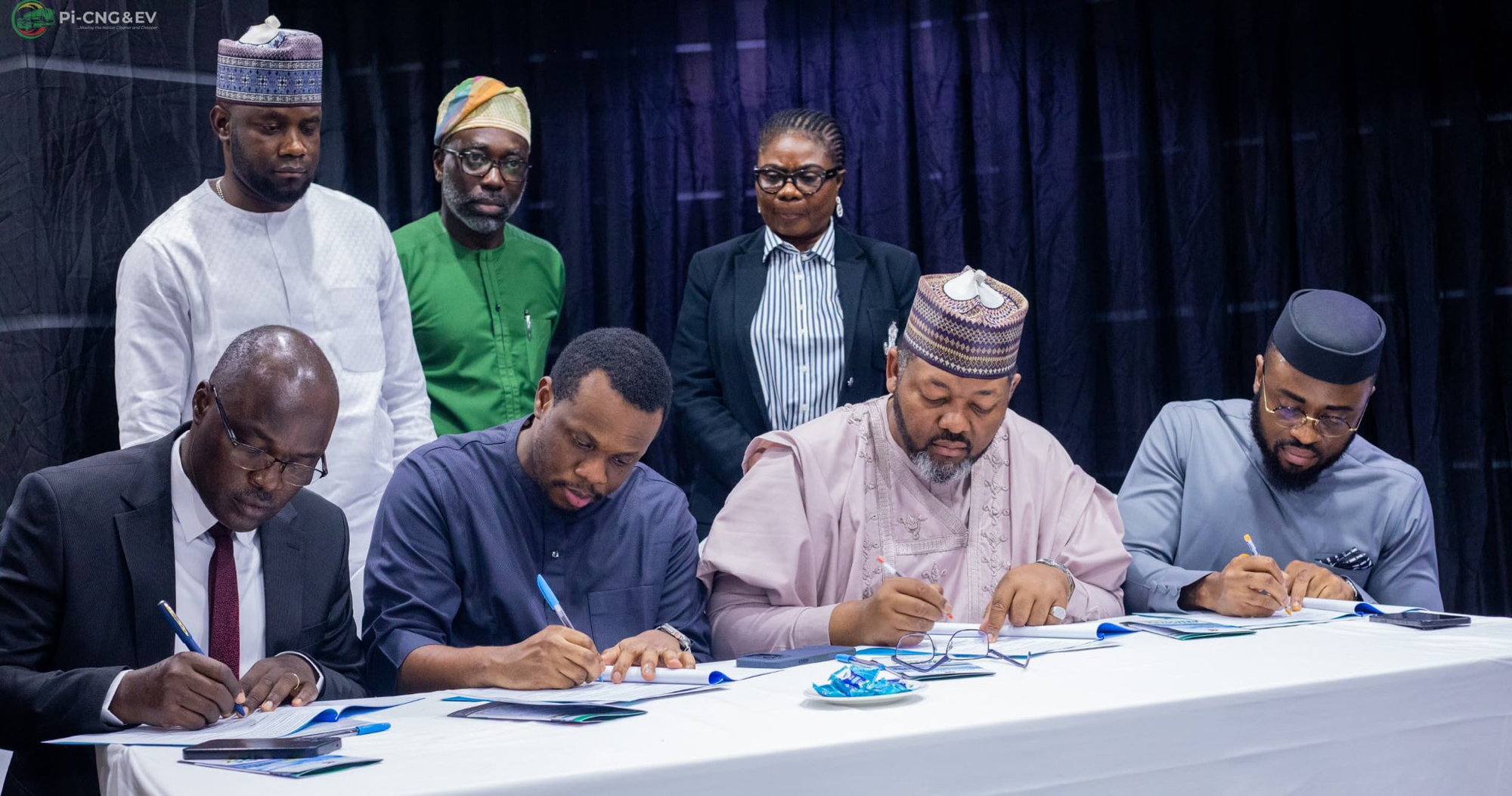
The Presidential Initiative on Compressed Natural Gas (PiCNG & EV) introduced the Vehicle Conversion Financing Scheme in partnership with Moniepoint, CrediCorp, and the Nigerian Credit Guarantee Company. The scheme is built around one practical problem that has slowed CNG adoption despite obvious interest — the upfront conversion cost is simply too high for most commercial drivers and transport operators to absorb at once.

The financing framework changes that equation. Rather than requiring vehicle owners to find the full conversion cost before they can access cleaner, cheaper fuel, the scheme spreads that cost in a way that makes the switch financially manageable. The programme forms part of President Tinubu’s directive for a nationwide rollout of 100,000 CNG conversion kits — an ambition that was always going to require a financing solution if it was going to reach ordinary Nigerians rather than just those who could already afford it.

Executive Chairman of PiCNG & EV, Ismaeel Ahmed, was direct about the gap the scheme is designed to close. “This initiative is designed to make it easier and more flexible for Nigerians who want to convert their vehicles and tricycles to CNG, without facing the heavy financial burden that often stands in the way,” he said.
For commercial drivers, tricycle operators, and private vehicle owners, the arithmetic on CNG has always been attractive — lower running costs, reduced dependence on petrol prices that have been anything but stable. The barrier was never the logic. It was the entry cost. This scheme is an attempt to remove that barrier, and if the partnerships with Moniepoint and CrediCorp deliver the credit access they are promising, it could move the needle on Nigeria’s energy transition in a way that policy announcements alone have not managed to.